
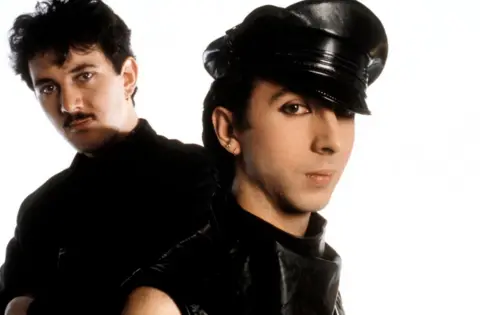
The talented musician, a key member of the innovative 1980s electronic music duo Soft Cell, has died at the age of 66.
Alongside vocalist Marc Almond, the team achieved a worldwide hit with their version of Gloria Jones' Tainted Love in 1984, and their debut album their initial full-length release is considered a classic of electronic music.
He later formed the pioneering techno group The Grid, who achieved chart success with 1994's Swamp Thing.
Ball died calmly in his sleep at his residence in London on October 22, just weeks after playing a featured performance with Soft Cell at the Rewind music event in Henley-on-Thames.
Health Struggles
During that show, Ball appeared in a mobility chair, as he had for the last two years, following a period of ill-health.
"I ended up injure myself quite a bit," he stated in 2023. "I fractured spinal bones in my back and cracked about five ribs and fractured my arm."
After catching a lung infection and developing blood poisoning, he was put in an medically-induced sleep and remained in the hospital for half a year.
However, he had been in "a great place emotionally" over the warmer months, as he was developing a new album with Almond, titled Danceteria, which is set for release next year.
"He was focused and so happy with the new album that we actually finished only a short time ago," said the vocalist in a tribute.
"It's so sad as 2026 was completely planned to be such an uplifting year for him, and I find comfort from the fact that he listened to the completed album and felt that it was a great piece of work."
Heartfelt Messages
Almond referred to his collaborator as "a wonderfully brilliant creative mastermind", adding: "He was the heart and soul of Soft Cell and I'm extremely pleased of our body of work.
"Many thanks Dave for being an immense part of my life and for the music you gave me. I wouldn't be where I am without you."
Richard Norris from The Grid, shared his condolences, remembering Ball's "endless laughter" and "unwavering friendship".
"Being in a partnership with someone is different from being in a band, the connection is incredibly close," he added.
"That's how it was with us. We experienced so many remarkable, incredible, memorable experiences as a team. Many thanks, Dave."
Formative Years
Brought into the world into a one-parent family in Chester in 1959, Ball was given up for adoption when he was a year and a half old.
He was raised in Blackpool with his new family his caregivers, who altered his first name from his birth name to his adopted name, together with his younger sister his sister, who was also adopted.
He encountered Almond at Leeds Polytechnic in 1977, where they were both studying fine arts. Inspired by a shared love of Northern Soul, they formed Soft Cell the very year, and promptly recorded an EP.
Musical Partnership
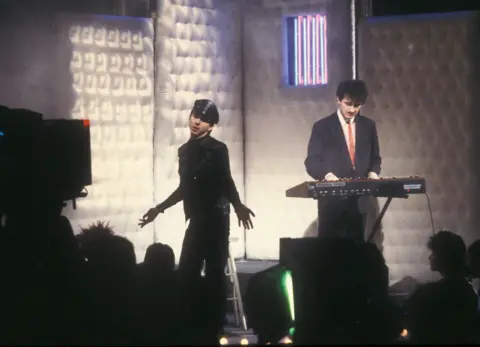
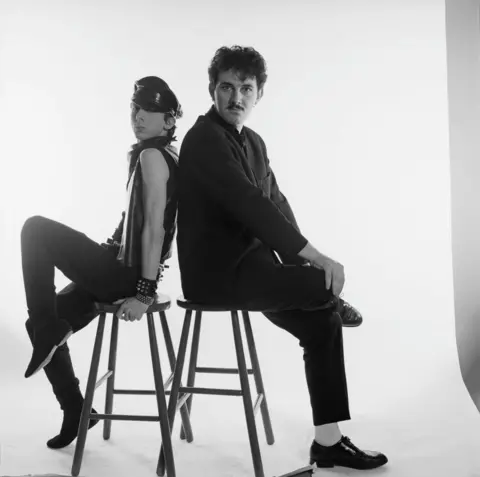
The duo were an unusual combination: Ball was the reserved musician, bent over his keyboard, while Almond was a charismatic performer, all glitter and makeup; but they attained a rare creative synergy.
Ball had cultivated a fascination with synthesizers after watching the band Kraftwerk perform on BBC program Tomorrow's World, and began to marry moody electronic sounds to the soaring melodies Almond was writing.
Their signature song became the United Kingdom's second biggest-selling song of the early 80s, shifting 21 million units worldwide. Alongside successful tracks by other artists, contemporary bands and electronic acts, it contributed to cleared the path for the electronic music style of the 1980s.
The song was also featured on their first album, Non-Stop Erotic Cabaret, which produced two additional top five singles: Bedsitter and Say Hello, Wave Goodbye.
They followed the album up with the stand-alone single, Torch, which peaked at number two in the following year.
Professional Journey
Fame had its benefits. "I loved being able to purchase my initial property, having money and exploring, which makes me sound like a Miss World," Ball not long ago told with a publication.
But it also presented problems. "Sudden riches meant we could afford newfound drugs to relieve the monotony" of media interviews and TV performances, Ball said.
"I know that's a common saying, but it's a cliché for a valid cause, because it works for so many musicians."
Amidst the hedonistic lifestyle, the pair were also drifting apart, but they succeeded to create a follow-up memorable record - the unconventional, tense and aptly-titled The Art Of Falling Apart.
They released one more album, 1984's This Last Night In Sodom, before ending the group to concentrate on individual endeavors.
Almond proceeded to have a prosperous solo career, including the chart-topping single Something's Got A Hold Of My Heart; while Ball formed The Grid, who combined acid house with ambient pop over a enduring collaboration.
Later Work and Comebacks
Soft Cell came back together in 2001, producing the Top 40 album Cruelty Without Beauty.
After another hiatus, they returned in recent years, releasing the new tracks Northern Lights and Guilty (Cos I Say You Are) before performing what was supposed to be a farewell show at the large venue on September 30, that year.
Yet, they stayed active, recording their latest project, Happiness Not Included, during the 2020 restrictions.
Ball lately described the duo's new album as a tribute to the New York club scene they frequented while making their first two albums.
He added that his period in medical care had influenced the group's music.
"I had strange recollections when I was in and out of the hospital because I was on morphine," he explained to a music magazine.
"The new songs are a electronic representation of the sounds in my head from those days.
"In parallel, it's about the times we got up to in the 1980s."
The final mixes were finished only a short time before Ball died. It is due for launch in the spring of 2026.


